The Empty Chair: A Calm Recovery Plan for When Your Salon Closes
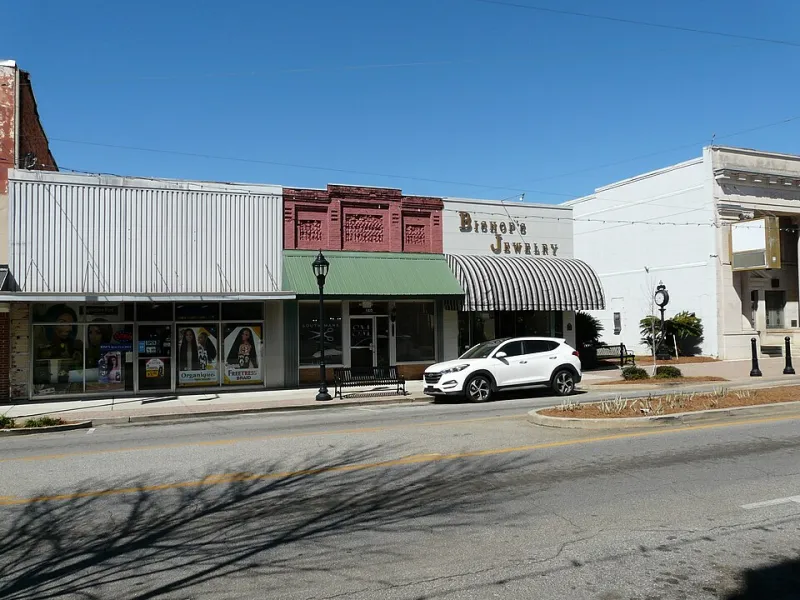
Photo: The Bushranger, CC BY-SA 4.0, via Wikimedia Commons
There is a particular kind of quiet that settles over a high street when a salon you have used for years stops being a salon. The chairs are still there, the mirrors still catch the light, but the door is locked and the phone rings out. Maybe you found out from a handwritten note taped inside the window. Maybe you found out from Instagram, which is somehow worse.
If that has just happened to you, take a breath before you do anything else. A closure is a small administrative crisis and a small emotional one, and the two tend to arrive together. The trick is to deal with the paperwork first, the feelings second, and the replacement salon last — not the other way round.
First, work out what you are actually owed
Before you start mourning the loss of a good blow-dry, make a list. It is deeply unglamorous and it takes twenty minutes, but it will tell you whether this is a shrug or a proper claim.
Ask yourself:
- Was there a gift card in your purse, or one you bought for someone else?
- Had you prepaid for a course of treatments, a package, or a block of sessions?
- Was a deposit sitting on an appointment that never happened?
- Were you partway through a loyalty card or app-based points scheme?
Write down each one with the amount, the date, and how you paid. If you paid by credit card for anything costing between £100 and £30,000, Section 75 of the Consumer Credit Act may make the card provider jointly liable — that applies to gift cards and prepaid packages as much as to faulty kettles. Below £100, or on a debit card, ask your bank about chargeback instead. It is not a legal right in the same way, but it is often worth the phone call, and the sooner the better.
The gift card question, answered plainly
This is the bit nobody wants to hear: when a salon goes into administration, gift cards are usually treated as unsecured claims. Sometimes the administrator honours them, sometimes they do not, and sometimes they announce a short window in which to use them. Check the salon's website, Companies House, and the Insolvency Service register for the administrator's name. Then register your claim in writing, with receipts or screenshots of the balance.
If the closure is a straightforward retirement or a lease ending rather than an insolvency, the owner may simply refund you. Ask politely, in writing, once. Keep a copy. And if you paid by card, put the chargeback in motion in parallel rather than waiting to see how the refund goes — you can always withdraw the claim if the money turns up.
Loyalty points, sadly, are almost never worth chasing. Treat them as gone and move on; the emotional energy costs more than the £12 voucher.
Your records: what you can ask for, and what you probably can't
The detail that stings most in a closure is not the money — it is the formula. The exact mix that finally made your highlights look like sunlight rather than stripes, the patch test date, the notes on which serum your scalp tolerated.
Under UK GDPR you have a right of access to your personal data. A subject access request is free, must be answered within a month, and can be sent to the salon's last known email address. If the business has genuinely vanished, you may get nothing, but it costs one email to try. Ask specifically for your colour formulas, treatment records, allergy and patch test notes, and appointment history. Many stylists and therapists will share the technical detail as a courtesy even when they are not obliged to, particularly if you ask them personally rather than the company.
If you can, screenshot your online booking history and any aftercare notes before the website goes dark. Future you will be grateful.
Finding a replacement without panic-booking
The first Saturday slot at the nearest salon is not a plan — it is a rebound. Use the same instinct you would use for any new address: book a consultation or a smaller service first, and treat the first appointment as a test rather than a commitment.
Start with the people, not the premises. Your stylist or therapist has to work somewhere. Look them up on Instagram, check whether they have landed nearby, and send a message. Good chairs move more often than good clients do, and following the hands is nearly always better than following the sign above the door.
Then widen the search. Ask the receptionist at a salon you already trust who they would recommend for the thing you need. Local Facebook groups are surprisingly useful in the first fortnight after a closure, when everyone is asking the same question. And do not overlook the quiet options: a mobile therapist, a college training salon with a supervising tutor, a smaller room above a shop that never advertises.
The warning signs worth noting, without turning detective
Most closures are not foreseeable, and it is not your job to audit a business you are simply a customer of. But a few patterns are worth filing away. Repeated staff departures in a short space of time. Opening hours quietly shrinking. A sudden, hard push on prepaid packages and long courses. A 'closed for refurbishment' sign with no return date. A phone that rings out for a fortnight. None of these is proof of trouble, and plenty of healthy salons go quiet in August.
But if two or three land together, it is a reasonable moment to stop buying long gift cards, use up any credit you hold, and make sure you have a second address in mind.
Build a beauty book that doesn't hinge on one door
The real lesson of a closure is structural. A beauty book with a single address per service is a book with a single point of failure. Keep a backup for the things that matter: a second colourist you would trust in an emergency, a therapist who does a decent last-minute facial, a mobile option for the week your usual place is shut.
Note it down. Not in your head — in the actual book, or the notes app that does the job. The Beauty Book is meant to be a living directory, and living things have more than one page.
A short recovery timeline
Day one: make the list, screenshot everything, send the first emails. Week one: file the chargeback, request your data, message your stylist. Week two: book a consultation somewhere new, and only somewhere new. Month one: decide whether the replacement earns a line, and write the backup address beside it.
Salons close. Address books adapt. That is the whole job.