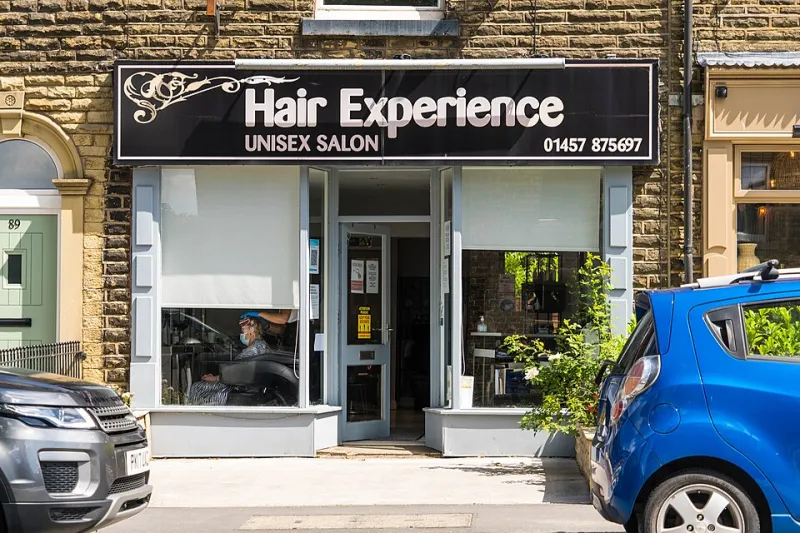
The Sounding-Out Call: Eight Questions to Ask a UK Salon Before You Commit
Photo: Alan Murray-Rust, CC BY-SA 2.0, via Wikimedia Commons
Most consultations happen in the chair, by which point you have already paid a deposit and cleared your diary. The savvier move is a short sounding-out call or direct message before you book. Not an interrogation — just enough to hear how a UK salon talks about its own work.
Below are eight questions that stylists, colourists and therapists say reveal more than a glossy feed ever will. For each, note what a good answer sounds like, what should make you pause, and what to write in your beauty book before committing.
1. Who will actually be doing my treatment — and how long have they been with you?
A good answer gives you a name, a role and a bit of history: 'It's Priya, she has been with us three years and does most of our balayage.' You want to know whether you are booking a person or a slot.
Pause if you hear 'whoever is available' or 'we will match you on the day'. That is not always a red flag in a busy walk-in barber, but for a colour or facial it matters.
Log it: the therapist's name, how long they have been at the salon, and whether they are likely to be your regular.
2. What is the realistic total — including any extras, VAT and aftercare?
A good answer comes as a range, with the variables spelled out: hair length, density, colour corrections, a patch test fee if one applies. It should also distinguish between a necessary product and an optional upsell.
Pause if you only get a 'from' price with no ceiling, or if VAT and aftercare are waved away as details. A deposit is fine; a vague deposit is not.
Log it: the quoted range, the deposit amount, and whether the consultation itself is free.
3. How do you handle patch tests and allergies?
A good salon asks about reactions before you ask them. They will explain the timing — usually 48 hours before colour — and confirm whether the test is free or carries a small charge. They keep a record.
Pause if you hear 'we don't usually bother unless you ask' or if a sensitivity is dismissed as fussing. Patch tests are not admin; they are the point.
Log it: the date of your patch test, who carried it out, and any reaction noted.
4. What is your cancellation and lateness policy — in plain English?
A good answer is specific: a 48-hour window, what happens to the deposit, whether it can be transferred, and how illness is handled. You should not have to decode it from a paragraph of small print.
Pause if the salon says it is flexible but the booking form says otherwise, or if the deposit is non-refundable in every scenario, including a power cut. Policies can be strict; they just need to be clear.
Log it: the cancellation window, deposit terms, and whether you were told verbally or in writing.
5. What does aftercare look like, and how much upkeep am I signing up for?
A good answer names products, frequency and the realistic rebooking interval. It should also tell you what happens if you skip a step — not as a threat, but as information.
Pause if you get 'just use whatever you have at home' alongside a treatment that clearly needs support, or a promise of zero maintenance. Very few good treatments are zero maintenance.
Log it: the aftercare steps, any recommended products, and the suggested time before your next appointment.
6. What is the room like on the day — how many clients at once, and is there a quiet window?
A good salon is honest about its busiest periods and can offer a calmer slot: a Tuesday morning, an early Thursday, the first appointment after lunch. They will also tell you whether you will be passed between assistants.
Pause if every slot is described as rammed with no alternative, or if privacy is not possible for a treatment that clearly needs it. Atmosphere is part of the service.
Log it: the best time to book, the noise level you expect, and whether the person you spoke to sounded rushed.
7. If I do not love the result, what is your adjustment policy?
A good answer invites you back within a set window — often seven days — for tweaks. It explains what is covered and what is not, and it does so without defensiveness.
Pause if you hear 'we do not offer refunds' before you have even asked, or if the tone suggests that complaining would be awkward. Every salon has a policy; the good ones say it out loud.
Log it: the adjustment window, who to contact, and whether the answer felt generous or guarded.
8. What would you recommend I book next — if anything?
A good answer can be 'nothing yet, see how it wears'. Or it can be a sensible maintenance slot that matches your budget and routine. Either way, it sounds like advice rather than a script.
Pause if you are pushed towards a three-treatment package before your first appointment, or if 'everyone books the full course' is offered as a reason. Pressure is not planning.
Log it: the recommended next step and whether it felt proportionate to what you asked for.
How to log it in your beauty book
Give this its own page before you book. Note the date, the salon, the person you spoke to, and each answer in one line. Add a simple one-to-five score for clarity. If two salons score the same, choose the one that gave you a name rather than a job title. Then add one final line: 'Would I feel comfortable ringing back with a problem?' If the answer is no, keep looking.
The point is not to grill anyone. It is to hear how they talk about their own work when nobody is watching the grid. Good salons answer these questions without flinching. The ones that make you feel difficult have just told you something useful — and your beauty book should record that too.